
To the women forging their paths and shaping their destinies, this chapter is dedicated to you. Here, we celebrate three remarkable stories of female empowerment and home ownership—proof that a true Happily ever after can be built on independence and financial freedom.
Let’s raise a glass to honour the resilience and strength of these women who have turned their home ownership dreams into reality. (Read more about My Story – Cara Julian, Mortgage Broker).

Maddi, 28, First Home Buyer
Congrats on adulting so hard! How did it feel when you signed the papers and officially became a home owner?
Pretty shocked! I bought the house at an auction so it was pretty stressful and fast paced. I didn’t expect to win this place at all as I had been looking at past auction results for similar style properties in the area which had gone way over the reserve price so I wasn’t confident that I would win.
During the auction I was already thinking about my backup plan.
What sparked your motivation to dive into the world of real estate at such a young age?
I was needing to move out of my shared rental and couldn’t face going through the process again. I had been living in a shared environment for a while and was over it. Lots of my friends were buying their own homes so I started looking at what was available. Next minute I had engaged a real estate agent and a mortgage broker, and the wheels were set in motion. It also felt like the right thing to do. I wanted the security of having my own place; I didn’t want to have to worry about rent increases, lease expirations,
sharing with other people, etc. I wanted to be able to hang a shelf myself without calling a landlord for permission! Seemed like the right thing to do.
Buying a house is a big financial leap. Can you share the savvy strategies or financial tips that helped you make this significant purchase?
I was lucky to have had the influence of financially savvy parents growing up, so I have always been good at saving money, even as a little kid. I remember at a young age having a CommBank account and a little red pouch I would put my savings into, then pop along to the bank to deposit my money. It was a good feeling! Having financially savvy parents has also been super helpful as I have grown older. It is comforting knowing I have them as my support team to discuss my options with.
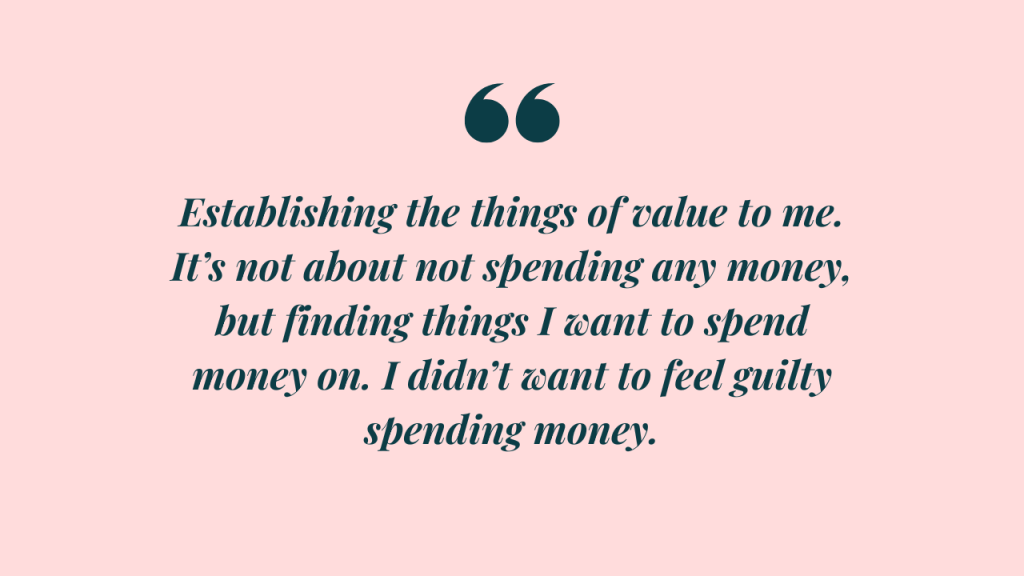
At times when saving was hard, I had to adjust my priorities. To keep me on track, I would often take a minute and weigh up all my other needs and wants versus having a house. I made choices to allow me to save money – I didn’t have a car and I lived with my parents right through uni.
So I had a good base. I worked hard and focused on saving money. I invested my savings into shares so I couldn’t touch it until I was ready to buy a property. This helped my mindset a lot as I felt I had a good plan in place and was taking necessary actions to meet my financial goals while passively earning a wee bit of income. It felt good when I started looking at property knowing that I had this money sitting there.
Home ownership often involves unexpected expenses. How did you prepare for potential financial curveballs, and any advice for others on building a solid financial safety net?
As much as I hate to admit it, I wasn’t as prepared as I should’ve been. My advice is to give yourself a safety net and be prepared for the unexpected expenses. When I first moved into my new place I discovered that the oven didn’t work, plus I was hit with body corporate fees earlier than I had anticipated. I only just scraped through and it was a stressful time!
Investing in real estate at a young age is impressive. Were there any doubters or naysayers along the way, and how did you prove them wrong with your financial prowess?
I was lucky that everyone was pretty supportive. However,
Some people were surprised that I did it on my own, without a partner.
It is harder with only one income and I had to adjust my expectations, but I did it. I feel proud. I also love the financial freedom and security this gives me. Sometimes relationships don’t work out, and things can become messy if you share a property together. Fortunately this is something I now don’t have to worry about.
For more stories like Maddi’s, check out 6 Women On How They Bought A Home On Their Own.
They say patience is a virtue. How did you stay patient and focused on your financial goals during the sometimes lengthy home-buying process?
I was pretty stressed during the process – and also very impatient. But I was lucky to have a great support structure around me of my parents and friends (including a real estate agent). I also found having a mortgage broker in my court was a huge help.
I asked a lot of questions along the way to help build my knowledge and confidence. I spent the time reading through all of the information and documents to ensure I understood everything, which helped me feel more in control of the process.
In the world of real estate, knowledge is your secret weapon. Any books, podcasts or courses that you’d recommend to fellow aspiring young homeowners?
Google! I spent many hours googling anything I didn’t know, which was a great resource.
You’ve officially levelled up in the real estate game. What’s the next financial milestone you’re eyeing, and how does home ownership fit into your larger financial strategy?
I feel like I need a break from my strict savings regime and would love to go on holidays for my thirtieth! This will be my savings focus for the next wee while. My medium-term plan is to stay in this place for the next five years and pay off as much of the loan as I can. Then I want to rent this place and use the equity to scale up to a bigger place to move into to meet my financial and personal goals.
Let’s talk about celebrating victories. How did you commemorate the moment when you officially became a home owner with your finances intact?
Champagne!
Now that you’ve conquered the real estate realm, what financial advice would you give to other young women dreaming of making their mark in the home ownership arena?
It is doable. It feels daunting and I felt very out of my depth when I first started.
Also to stand up for yourself during the process. At first I tried to pacify people and felt the need to please them. An example of this is with a couple of real estate agents I dealt with early on who were quite pushy.
At the start I was trying to make them feel good for finding a property for me, telling them I liked it when I didn’t. But by the end of the process and as my confidence grew, I would give my honest opinion without fear of how it would be received.
Another example is at the auction for the property I have just purchased, I increased a bid by $1,000. The auctioneer pushed it to $2,000 and moved on to sourcing the next bid. I pulled him up on it and ensured he took my $1,000 bid.
Building a good support team is key.
What’s your favourite room in the new house, and why? Any quirky details that make it uniquely yours?
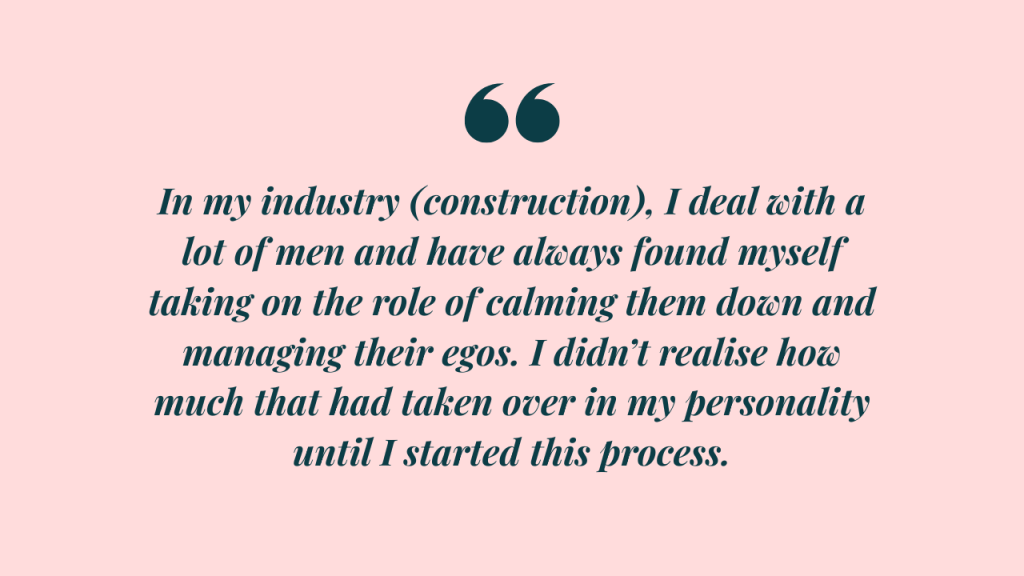
I love the living room. I have always lived in share houses so my bedroom was my only real private space. My new living room has a beautiful fireplace and mantel, and I have been able to decorate it how I like it – thanks for the mirror, Mum!
They say the kitchen is the heart of the home. What’s the first meal you cooked in your new digs to officially break it in?
I haven’t cooked anything yet as the broken oven is an ongoing saga. I bought the wrong oven! I am now waiting on a new one to be delivered and also finish some electrical work that needs to be done. I love baking so am looking forward to being able to bake my first cake in my new oven.
Share a funny story about the first time you met your new neighbours. Any memorable icebreaker moments?
The property I bought is quite old so it doesn’t have any setback laws you see in modern buildings. For example, you don’t normally have windows overlooking other houses’ rooms. My bedroom has beautiful light and fabulous Art Deco features, and I love hanging out in there. The only issue is that it looks directly into the neighbour’s bedroom. That first awkward wave through the window is definitely a memorable moment.
Let’s talk about home dreams. If money and practicality were no issue, what crazy item or feature would you add to your new place?
I would love to knock out the dividing wall between the kitchen and dining room to create more of an open space.
Lastly, if your new house had a personality, what would it be, and how does it reflect your own awesome personality?
She is old but well looked after. A refined lady. There is a lot of personality and beautiful Art Deco features on the ceiling. I can’t wait to do more styling – introducing colourful and vibrant features to tie in with the Art Deco style, which is a nod to my personality.
Liz, 32, Married with Separate Finances
Can you briefly introduce yourself and tell us about your background?
My name is Liz, I’m turning thirty-two this year and got married in October 2022. I’ve been with my husband for eight years now. We met while I was completing my master’s degree. I was working for seven years before quitting my job to start my own business this year.
How did you become interested in managing your finances independently, especially within the context of marriage?
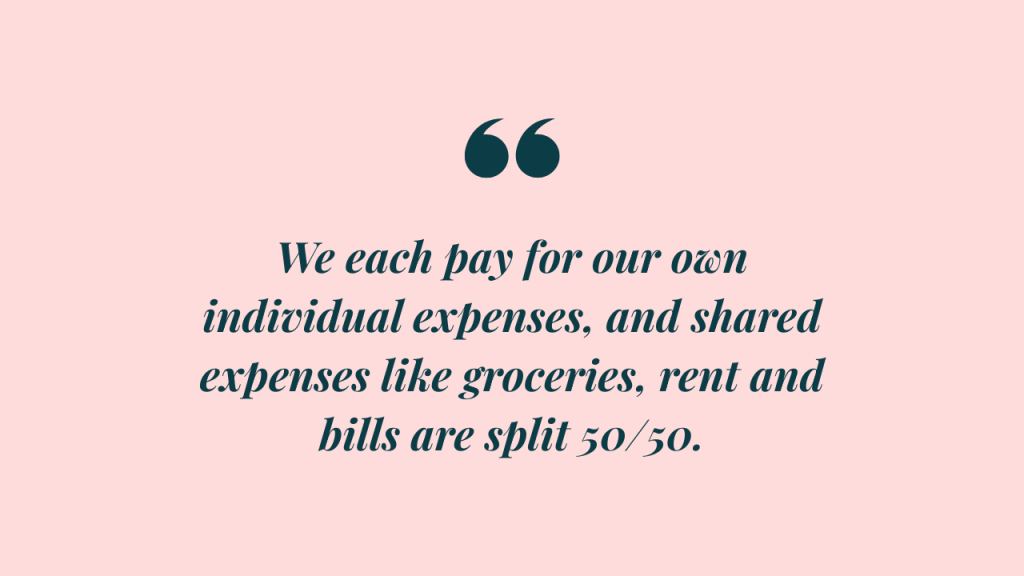
My husband and I have always kept our finances separate. In the very early days, he took me out on a few dates, but since then we have split the costs of everything evenly. It just seemed like the easiest thing to do, as we didn’t want to be affected by each other’s spending habits and didn’t want to argue about money. Also, as a side bonus, gifts feel a little more meaningful when you know you’re not paying for half your own gift.
Can you share some of the challenges you faced (if any) when initially trying to manage your finances independently?
I’ve never really faced any challenges with managing my finances independently as we have done this from the beginning of our relationship. I think the difference here is that when couples get together, at some point they tend to decide to open a joint bank account, or decide who will cover what cost. We never did that.
Were there any resources or tools that were particularly helpful to you in managing your finances, or were you already competent in this area?
I was already competent in this area. Actually, I feel like managing finances comes more naturally to me than it does to my husband as we were raised differently. My family had always run their own businesses, so we talked about money a lot, whereas money was more of a taboo topic in my husband’s family, as it is with a lot of families.
How do you and your spouse approach financial discussions and decision-making?
Although we keep our finances separate, we discuss it all the time as we are very much a team and use the discussions as an opportunity to work out how to improve our individual financial situations together. I also personally enjoy these conversations as I find it interesting and there are not many people you can talk openly with about it. Like everything else, we approach financial discussions by discussing everything thoroughly and we normally wind up agreeing on everything as we have similar goals.
Given that I was taught more about finances from my parents, my husband has adopted a very similar mindset to mine when it comes to money.
His relationship with money has changed a lot since meeting me. At the same time, I have also learned from his point of view and the way I think about money has changed a little accordingly. I feel like I used to be too tight with my money and would force myself to save it all, but now I make sure to live my life while saving responsibly! Overall we are currently very much on the same page when it comes to how we like to budget and how much we like to spend on things.
Can you share a specific financial goal you’ve achieved by managing your finances independently?
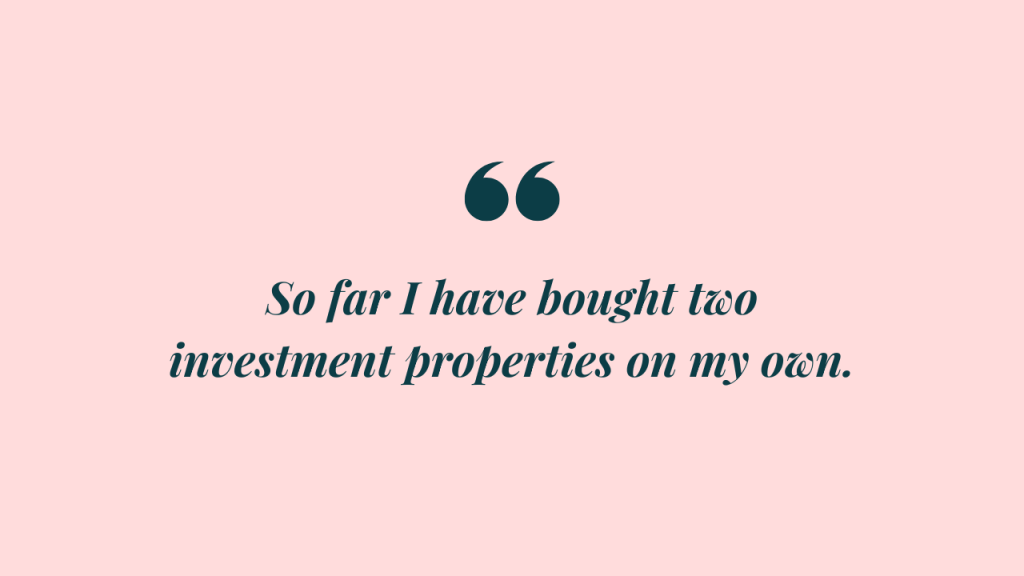
I have accumulated a fair bit of equity now so I would have been able to buy more by now, but I have to put a pause on buying property as I am no longer on PAYG (pay as you go employee).
How do you prioritise your financial goals and make decisions about spending, saving and investing?
This has changed since starting a business and I am still navigating through this, but, as a rule of thumb, my approach is to generally be reasonable with my spending, then whatever is left over goes into my savings. I don’t have a budget – I just don’t spend money on things that I feel aren’t worth it and I tend to not develop expensive habits such as eating out daily, so generally speaking I do have quite a bit left to go into my savings. This way of thinking has been ingrained in me since childhood. And then when I have enough, the plan is to invest in more property!
What advice would you give to other women who want to take control of their finances within their marriage?
Just give it a go. It’s not hard at all.
I’m sure you were managing your finances by yourself at some point. It’s also important to do this.
Have you encountered any misconceptions or stereotypes about women managing finances independently? How do you address them?
No, mostly because most people are not comfortable talking about money, and the ones who are have no problem with women managing finances independently. When I tell people that I manage my finances separately, I get met with one of two responses. Either people tell me something along the lines of, ‘Oh, well, my husband and I have a joint account – we’ve been doing this since we bought a house together,’ or they tell me that it’s great that I do this.
How has managing your finances independently impacted your relationship with your spouse?
I think it has had a positive impact on our relationship. We help each other out financially if ever needed and we help each other to improve our financial situations.
I also think it helps that our spending doesn’t impact each other. There are things he buys that I wouldn’t deem worth spending money on and there are things I spend money on that he would feel are unnecessary, but, since it’s our own money, it doesn’t bother the other party.
This approach reflects a growing trend in financial independence among women—explored further in Empowering Women as Homebuyers.
What role does financial literacy and education play in your approach to managing finances?
I think it plays a huge role in our approach to managing finances. As I mentioned earlier, my in-laws did not provide any financial education to my husband, so he has had to start from scratch, whereas I am grateful to have been given a strong foundation since childhood. My sister and I have recently talked about the fact that we are lucky to have this, because we’ve realised over the years that some of our friends make really bad financial decisions due to not knowing how to approach their finances.
Are there any financial mistakes you’ve made along the way? How did you learn from them?
Not really. I feel like I am generally very conservative.
How do you stay informed about financial trends, changes and opportunities?
I follow finance influencers on Instagram.
Can you share a personal finance tip or strategy that has been particularly effective for you?
If someone feels like they are spending too much and need to cut back, I would suggest for them to take a step back and review their spending. It’s probably easiest to cut back on things that cost the most as this will have the biggest impact. And don’t take an all or nothing approach as it is not sustainable. If you eat out for lunch and dinner every day, you can try cooking at home three days per week and slowly increase it instead of jumping into eating at home every day. I feel like mindset also matters.
If you want to cut back on eating out, don’t see it as a horrible thing you have to do – put a positive spin on cooking at home and learn some fun recipes that you enjoy cooking and eating! Also, just little things like checking that you are getting a reasonable deal with insurance and utility providers – this will all add up.
What financial goals are you currently working towards?
I am currently rentvesting so I’d like to buy more investment properties and perhaps buy a house in Melbourne one day.
How do you celebrate financial milestones or achievements with your family?
When I buy a new property or if anyone in the family gets a pay rise or promotion, we tell each other and congratulate one another.
What does financial independence mean to you, and how do you define it in your own life?
Finally, what message would you like to convey to women about the importance of financial independence and empowerment?
Money is a personal thing, so you should really, at the very minimum, have a clear overview of what’s happening with yours.
Financial independence is so important, and it’s really not hard.
Linda, 50, Single Mum of Two
So, you’ve been on a financial rollercoaster. Can you share a bit about the wild ride?
After separating from my ex-husband, I was shocked about how financially vulnerable I felt. Although I had a good understanding of financials, and my own business to provide income, I was all of a sudden in my own boat, needing to navigate my future financial security for myself and two young children. I had lost the captain!
If your financial journey had a theme song, what would it be and why?
‘Under Pressure’ by Queen and David Bowie describes exactly how I felt after coming out of my separation and realising that my financial security rested solely on my shoulders.
What’s the most outrageous money-saving hack you swear by?
It’s not outrageous but I did attend some Bunnings home DIY repairs courses that covered basic home maintenance tasks so I could avoid costly professional services for minor repairs around my house.
We’ve all got that one guilty spending pleasure. What’s yours, and how did you make peace with it on your journey to financial success?
I like to get my nails done and I did reassess this ‘luxury’ when I redid my budget as a single mum, but I decided to allow for this in my budget because I prioritise self-care and this was an example of something that gave me a break and helped me feel good about myself.
If you could time-travel and give your younger self some advice on going through a divorce and getting back on your feet financially, what would it be?
Reach out for support from your friends and family, and gather a good support team of advisers to rely upon. To give you a game plan to follow.
Let’s talk about the power of persistence. What kept you going when the financial road got bumpy?
My kids, and knowing that I had to keep going to create a financially secure future for us.
Money mistakes are like exes – we’ve all got them. Which ‘financial ex’ would you say taught you the most valuable lesson?
Trust your gut. If something doesn’t feel right, it’s probably because it isn’t!
I wasn’t comfortable investing in the stock market because I didn’t know much about it. I took some advice from a friend and invested some money and I actually lost money! Fortunately it wasn’t a lot as I just wanted to dip my toes in, but it taught me a good lesson. I have since educated myself on stocks and don’t feel like I am going in with my eyes closed anymore.
Divorce is a tough journey. What financial strategies or lessons did you learn along the way that helped you rebuild and buy your own place?
I invested in educating myself in key areas that I felt I wasn’t overly strong in. And with the help of professional advisers, I felt more confident navigating the ‘financial world’ journey.
Budgeting is a superpower. What budgeting hacks or financial habits did you adopt to ensure you were on the path to home ownership post-divorce?
I decided to keep it simple and created a simple spreadsheet, which tracked my spendings versus income so I could see the areas I needed to cut back on and opportunities for savings.
Did the gender financial gap play a part in your confidence after your divorce?
So it was during this time that I started my own business to increase my financial independence and start adding to my superannuation balance while still being able to have the flexibility to be with my children.
Did you have any outdated and archaic views of finances you brought into your marriage that played a part in your degree of financial confidence after your divorce?
Yes, while I was fairly well financially educated, I was inclined to rely on my husband during our marriage to make the financial decisions – especially after my first child was born and I became a stay-at-home mum. This was a big reason I felt so financially vulnerable after the separation because I was out of practice!
What financial adjustments or changes did you make in your lifestyle to pave the way for home ownership post-divorce?
I tightened the reins on my spending on non-essentials for the period I needed to save hard to build a deposit for a house. It wasn’t easy. However, I kept my eye on the prize of home ownership, which I knew would create financial stability for my boys and myself. I even wrote myself reminder notes and put them up around the house, which helped a lot. There were definitely times when this became tough and all of my friends were going away on fancy trips, but I knew I had to keep focused on my goal.
Investing in oneself is key. What personal and financial growth did you experience that ultimately contributed to your ability to buy a house independently?
I did an awful lot of self-development work (once my head was in a position to focus!) to try and help the healing process. This helped create a more positive mindset, which ultimately made achieving more goals easier. Don’t get me wrong – it wasn’t always a straight-line trajectory. There were times when I felt I was going backwards!
Let’s talk empowerment. How did the act of buying your own home contribute to your sense of financial independence, confidence and empowerment?
I remember the day my house settled and popping that bottle of champagne. I chose to celebrate on my own because I wanted the time to reflect on my journey and see how far I had come … on my own! I realised I didn’t need my husband to create financial security. That was a huge uncovering and helped my confidence enormously.
Stories like Linda’s remind us that women at all stages of life can achieve financial independence. (See more at 6 Women On How They Bought A Home On Their Own).
Divorce can sometimes lead to financial surprises. Any advice on how to financially prepare for unexpected twists and turns on the road to rebuilding after divorce?
One of the biggest ways to mitigate any unexpected financial surprises is to know what is going on with your finances at all times.
Especially if you are in a relationship, know your financial position – understand your budget and be 100% across any debts you share because you never know what is around the corner and when you could be expected to have to manage on your own. It is a hard enough time just going through a divorce, let alone needing to uncover your financial position and deal with any nasty surprises.
Let’s chat about financial self-care. How did you take care of your financial well-being while navigating the emotional aftermath of divorce?
Investing in financial education to help build my confidence made me feel more in control of my situation.
What financial goals or dreams are you now pursuing?
I have managed to build enough equity in my home to start investing in property, which is exciting!
Lastly, what advice would you give to other women who have been through a divorce and are working towards financial independence and the dream of home ownership?
You will get there. It’s not easy but believing in yourself, investing in financial education and self-development, and building a strong network of support around you can make all the difference.
Ready to Transform Your Relationship with Money?
Don’t let another day pass feeling uncertain about your mortgage decisions or financial future. “Why You Should Date Your Bank, Not Marry Them” is your roadmap to financial confidence and mortgage mastery.
Get your copy today – completely FREE!
Whether you prefer to download instantly or have a physical copy shipped to you, we’ve made it easy. Simply click the link below to discover how you can claim your free copy and start building the financial knowledge that will serve you for years to come.
Take the first step toward dating your bank like a pro, not getting trapped in a financial marriage you don’t understand. Your future self will thank you.